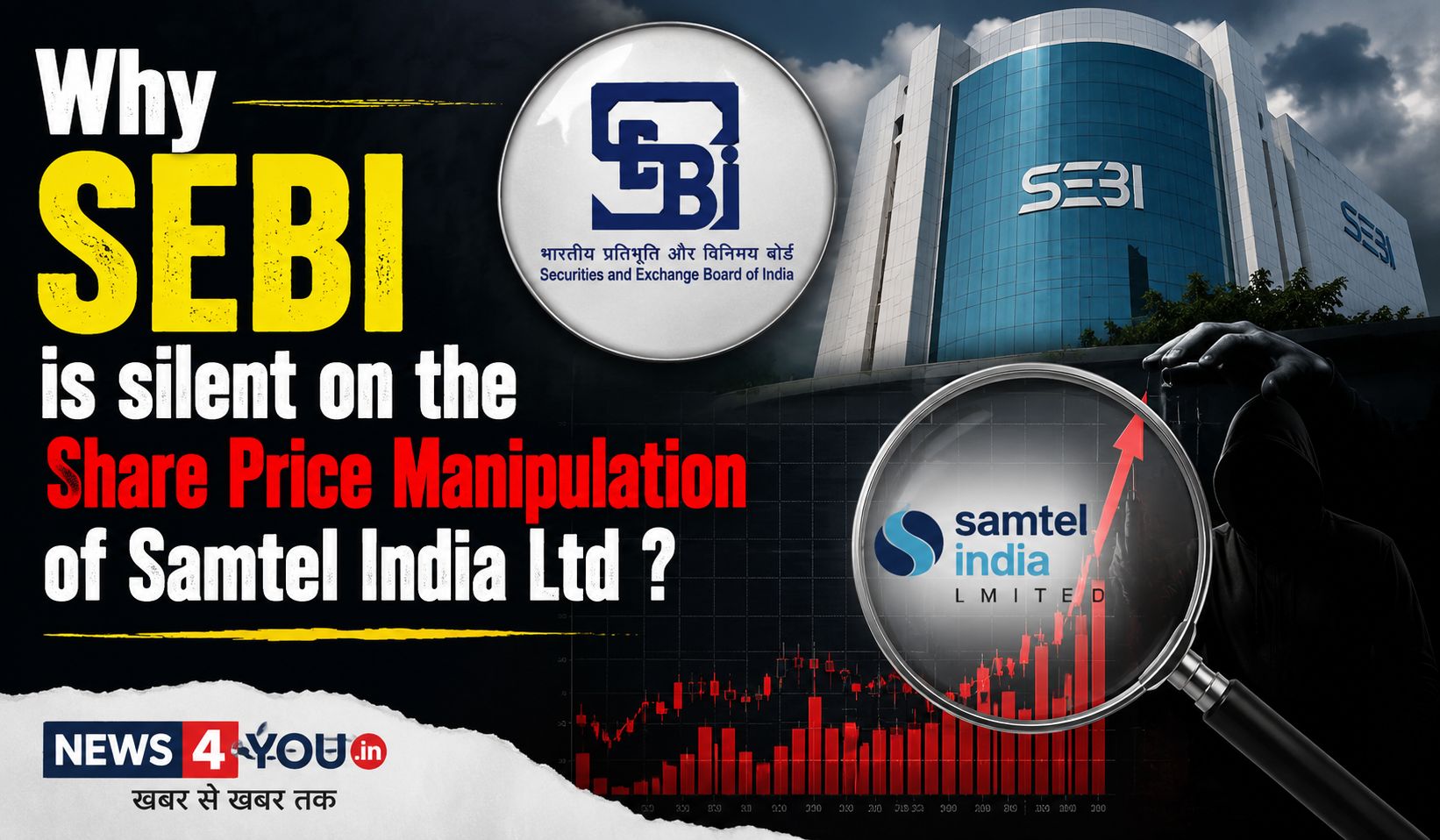
The sudden and unexplained rise in the share price of Samtel India Ltd has once again raised serious questions about the effectiveness of market surveillance mechanisms in India. Just a few weeks ago, the stock was trading near Rs.20, and now it is hovering around Rs.43 despite extremely low daily trading volumes. In many trading sessions, only a few hundred shares are exchanged. Such unusual price movement in an illiquid stock naturally creates suspicion of price rigging and artificial manipulation. Yet, the silence of Securities and Exchange Board of India (SEBI), stock exchanges, and the Corporate Affairs Ministry is becoming increasingly difficult to understand.
The Indian stock market has witnessed several cases in the past where operators manipulated the prices of penny and illiquid stocks through circular trading, synchronized deals, and artificial demand creation. The pattern visible in Samtel India’s share price movement appears similar. When a stock with negligible trading activity suddenly doubles within a short span without any major publicly disclosed business development, investors are justified in questioning whether genuine market forces are at work.
One of the most worrying aspects of such movements is the risk posed to small retail investors. Many inexperienced investors often get attracted by rapidly rising share prices and assume that some major positive development is taking place inside the company. Social media platforms, WhatsApp groups, and Telegram channels further amplify speculative excitement. By the time ordinary investors enter the stock, operators may already be preparing to dump their holdings at inflated prices, leaving retail participants trapped at higher levels.
SEBI has repeatedly claimed that it possesses advanced surveillance systems capable of detecting abnormal trading patterns. Stock exchanges also monitor price and volume fluctuations on a real-time basis. If that is true, then why has no visible action been initiated in the case of Samtel India Ltd? Even if there is no confirmed wrongdoing yet, regulators owe an explanation to investors regarding whether the unusual trading activity is under examination.
The matter becomes more concerning because illiquid stocks are easier to manipulate compared to large-cap companies. When daily trading volume is extremely low, even limited buying activity can push prices sharply upward. This creates an artificial impression of investor interest and momentum. In such cases, regulators are expected to act proactively rather than waiting for investors to suffer losses after a possible collapse.
The Corporate Affairs Ministry should also examine whether there have been any undisclosed developments, preferential transactions, or insider activities connected with the company. Transparency is the backbone of capital markets. If the price rise is supported by genuine business improvements, the company should clearly communicate the reasons to shareholders. However, if there is no substantial fundamental trigger, then regulators must investigate whether market manipulation is taking place.
India’s capital markets have expanded rapidly in recent years, with crores of new retail investors entering the stock market. This growth can continue only if investors believe that regulators will act fairly and decisively against suspicious activities. Silence in cases involving abnormal price movements damages investor confidence and creates an impression that manipulators can operate without fear.
The Samtel India episode is therefore not merely about one small-cap stock. It is about the credibility of India’s regulatory framework itself. SEBI, stock exchanges, and the Corporate Affairs Ministry must immediately clarify whether the recent trading pattern in Samtel India Ltd is being investigated. Protecting retail investors and maintaining market integrity should remain the top priority of every financial regulator in the country.
Disclaimer: Investments in Capital Market/Share Prices are subject to market fluctuations and are dependent on several factors. These predictions are based on the current market conditions and the future market expectations. Investors are advised to take into consideration all these factors before making any investment in Capital Market. This article should not be treated as Investment advisory and is for general Guidance & Educational purpose only. We keep revising our share price targets based on the latest information available with us. Please keep visiting our website regularly to keep yourself updated. News4You does not offer investment advice and does not encourage any action based on its content.
Read Also:
Also Read :
How to make money from share market? (indiatimes.com)
Visit our another Group Website regularly for more such Educational Research Articles:
MoneyInsight – We Provide Insight to Your Money
Visit & Subscribe our Devotional Music Channel on YouTube:
Indian Devotional Music – YouTube
Visit our Website regularly for more such Educational Research Articles:
News4You – News & Views On Personal Finance & Share Market